Many real estate teams already use a CRM.
They may also use landing pages, lead forms, email tools, texting platforms, ad platforms, automation tools, spreadsheets, and lead providers. But even with all of these systems in place, the lead handling process can still feel scattered.
That is because a CRM is not always enough by itself.
A CRM can store information. It can help manage contacts. It can support communication. But many teams still need a clearer operational layer for what happens between lead capture and lead conversion.
That is where an AI lead operating system comes in.
What is an AI Lead Operating System?
An AI Lead Operating System is a structured layer that helps teams manage the operational workflow behind inbound leads.
For real estate teams, that means helping answer questions like:
Which leads need attention first?
What does this lead want?
Who should own the next step?
What action should happen now?
Which follow-ups are due or overdue?
What is happening across the team’s pipeline?
CloserOS is built around this idea. It helps real estate teams turn inbound lead flow into a more accountable operating system.
The goal is not to replace your CRM. The goal is to help your team use lead information more effectively.
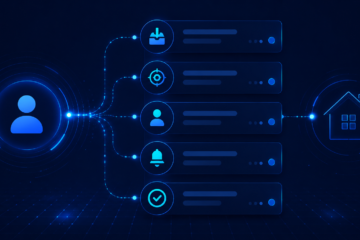
It captures lead flow into a structured workflow
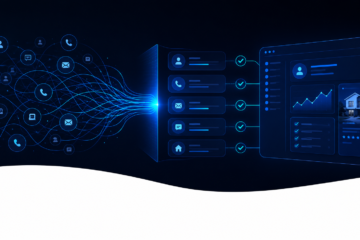
Inbound leads can come from many different sources.
A team may receive leads from website forms, ads, calls, emails, referrals, social media, and third-party platforms. Without structure, this lead flow can become difficult to manage.
An AI lead operating system helps organize incoming activity so the team has a clearer starting point.
Instead of treating lead capture as the finish line, CloserOS treats it as the beginning of the workflow.
Once a lead enters the system, it can be evaluated, summarized, assigned, and moved toward the right next step.
It scores and prioritizes leads
One of the most important things an AI lead operating system can do is help evaluate lead intent.
Not every lead is equal. Some opportunities are urgent and high value. Others may require nurturing. Some may be incomplete or low priority. If every lead looks the same inside the workflow, agents may not know where to focus first.
CloserOS helps teams use AI lead scoring to prioritize inbound opportunities.
That means high-intent leads can be surfaced faster, while lower-priority leads can be handled through the appropriate workflow path.
This helps reduce manual triage and gives agents more clarity around where to spend their time.
It summarizes the lead and recommends a next step
Lead information is only useful if agents can understand it quickly.
An AI lead operating system can help summarize important context so agents do not have to dig through scattered notes or raw form submissions.
CloserOS can help provide an AI summary and next-step recommendation so agents know what they are looking at and what action should happen next.
This may include context around the lead’s interest, timeline, location, intent, or urgency.
For busy real estate teams, this matters because speed and clarity can improve follow-up quality.
It supports lead assignment and routing logic
A strong lead operations process needs clear ownership.
An AI lead operating system can help route leads based on the rules your team actually uses. That might include territory, lead type, price range, source, availability, agent role, or custom business logic.
Instead of relying on manual review or unclear handoffs, CloserOS helps bring more structure to who owns the next step.
This is especially valuable for brokerages, team leaders, and growing teams that need consistent lead handling across multiple agents.
It turns follow-up into operational activity
Follow-up should not depend on memory.
An AI lead operating system helps turn lead response into visible operational activity. That means tasks, due dates, overdue follow-up, next steps, and team visibility all become part of the system.
CloserOS helps teams make follow-up easier to manage by surfacing what needs attention now.
This can help agents stay on track and help leaders see where follow-up execution may be slipping.
It gives leaders better visibility
Many team leaders do not just need more lead data. They need better operational visibility.
They need to know:
How many leads are active
Which leads are high priority
Which agents own which opportunities
Which follow-ups are due today
Which tasks are overdue
Where the pipeline needs attention
CloserOS helps bring this information into a clearer dashboard view so teams can manage lead activity more deliberately.
Why this matters
Real estate lead conversion is not just about generating interest. It is about turning interest into action.
If the lead process is scattered, teams lose speed. If assignment is unclear, accountability suffers. If follow-up is inconsistent, opportunities fall through the cracks.
An AI lead operating system helps fix the operational gaps between capture and conversion.
It helps teams move from:
Scattered intake to structured workflow
Manual review to AI-assisted scoring
Unclear ownership to assigned responsibility
Reactive follow-up to visible task execution
Disconnected activity to operational visibility
That is what CloserOS is built to support.
Closing thought
An AI Lead Operating System is not just another dashboard. It is a system for helping teams manage what happens after a lead comes in.
CloserOS helps real estate teams capture, score, assign, and operationalize inbound opportunities with more clarity and consistency.
For teams that want faster response, better accountability, and stronger follow-up discipline, an AI lead operating system can become the missing layer between lead generation and conversion.
0 Comments