Most real estate teams spend a lot of time trying to generate more leads.
They invest in paid ads, landing pages, IDX websites, portals, referral campaigns, social media, automation tools, and CRM systems. But even after the leads start coming in, many teams still feel like something is broken.
Response times are inconsistent. Follow-up depends on individual agent habits. High-intent opportunities get buried in the day-to-day workload. Team leaders do not always know which leads were worked, which ones were ignored, and which ones need attention right now.
That is usually not a lead generation problem.
It is a lead operations problem.
A real estate team can have plenty of inbound leads and still lose opportunities if there is no clear system for handling what happens after capture. The problem is not always the volume of leads. The problem is how those leads are scored, assigned, prioritized, followed up with, and managed across the team.
More leads do not automatically create more closings
When teams think they have a lead problem, the first instinct is usually to spend more money on lead generation. That can help, but only if the team has the operational structure to handle the leads already coming in.
If new leads enter the system but no one knows who owns them, how urgent they are, or what should happen next, more lead volume can actually create more confusion.
This is where real estate lead management often breaks down.
A lead comes in from a form, ad, call, referral, or website inquiry. It enters a CRM or spreadsheet. Maybe an agent gets notified. Maybe someone follows up quickly. Maybe the lead sits untouched. Maybe several agents assume someone else is handling it.
Without a clear lead operating system, the team is relying too much on memory, habit, and manual effort.
The real issue is inconsistent lead handling
Most real estate teams do not lose opportunities because they are not trying hard enough. They lose opportunities because the follow-up process is not operationalized.
Common issues include:
Leads are not prioritized clearly. Every lead looks similar, even though some are much more urgent than others.
Assignment is unclear. Agents may not know which leads are theirs or what the next step should be.
Follow-up is inconsistent. Some agents respond quickly, while others let opportunities sit too long.
Team leaders lack visibility. It is hard to know which leads are active, overdue, or falling through the cracks.
Manual triage takes too much time. Someone has to review, sort, and route opportunities instead of moving directly into action.
These issues create friction. Over time, that friction becomes lost revenue.
Operations create outcomes
Strong real estate teams do not just generate leads. They build systems around what happens next.
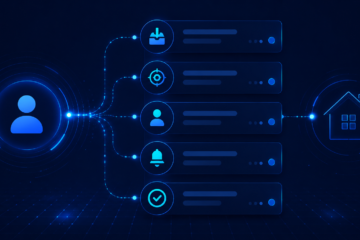
That means having a process for capturing every inbound opportunity, evaluating intent, assigning ownership, prioritizing follow-up, and tracking activity across the pipeline.
CloserOS was designed around this exact problem.
CloserOS acts as an AI lead operating system for real estate teams. It helps teams turn inbound lead flow into structured, prioritized action. Instead of leaving follow-up to scattered notes, manual review, or CRM clutter, CloserOS helps organize the operational layer behind lead response.
The goal is not to replace your CRM. The goal is to make the lead handling process clearer, faster, and more accountable.
What better lead operations can improve
When a team has a better lead operations system, the entire workflow becomes easier to manage.
High-intent leads can be surfaced faster. Agents can see who owns the next step. Team leaders can track due and overdue follow-up. Lead activity becomes more visible. Manual sorting becomes less necessary.
That kind of structure helps teams move from reactive lead handling to a more deliberate process.
Better operations can support:
Faster response prioritization
Clearer agent accountability
Better lead coverage
Less manual lead triage
More consistent follow-up execution
Improved visibility across pipeline activity
This is why lead operations matter. The quality of the system determines how effectively the team can convert the opportunities already coming in.
CloserOS helps teams close the operational gap
CloserOS helps real estate teams create more structure around inbound lead handling. It is built to help teams capture, score, assign, and operationalize leads so agents know who to follow up with, when to follow up, and why the opportunity matters.
For teams that already have leads coming in but struggle with inconsistent follow-up, unclear ownership, or poor visibility, the solution is not always more lead generation.
The solution is a better operating system for the leads they already have.
Closing thought
If your team is generating leads but still missing opportunities, the issue may not be demand. It may be the process behind the demand.
More leads can help, but better lead operations can make every lead more valuable.
CloserOS helps real estate teams bring more structure, speed, and accountability to inbound lead flow — so opportunities move closer to action instead of getting lost in the system.

0 Comments